If you’ve ever tried to grow a website, you’ve probably come across the debate of SEO vs PPC. Like most people working in the field probably prefer one of them, right? But you’re still confused about what to choose and which one is best for you. Some marketers use SEO because it delivers sustainable traffic and for many sites, like those in the packaging industry, this is evident. While others prefer PPC because it generates leads almost immediately, as seen in some online businesses.
But the truth is that, after so many experiments, there isn’t a one single answer. Every niche and every website demands different efforts so the right strategy depends on your goals.
If you just look at the hands-on experience having worked on SEO campaigns across multiple industries, I’ve seen businesses invest thousands of dollars into Google Ads while ignoring SEO entirely. I’ve also seen companies rely only on SEO and struggle because they need leads immediately. The businesses that achieved the most consistent growth usually understood when to use each strategy and sometimes combined both.
Quick Answer
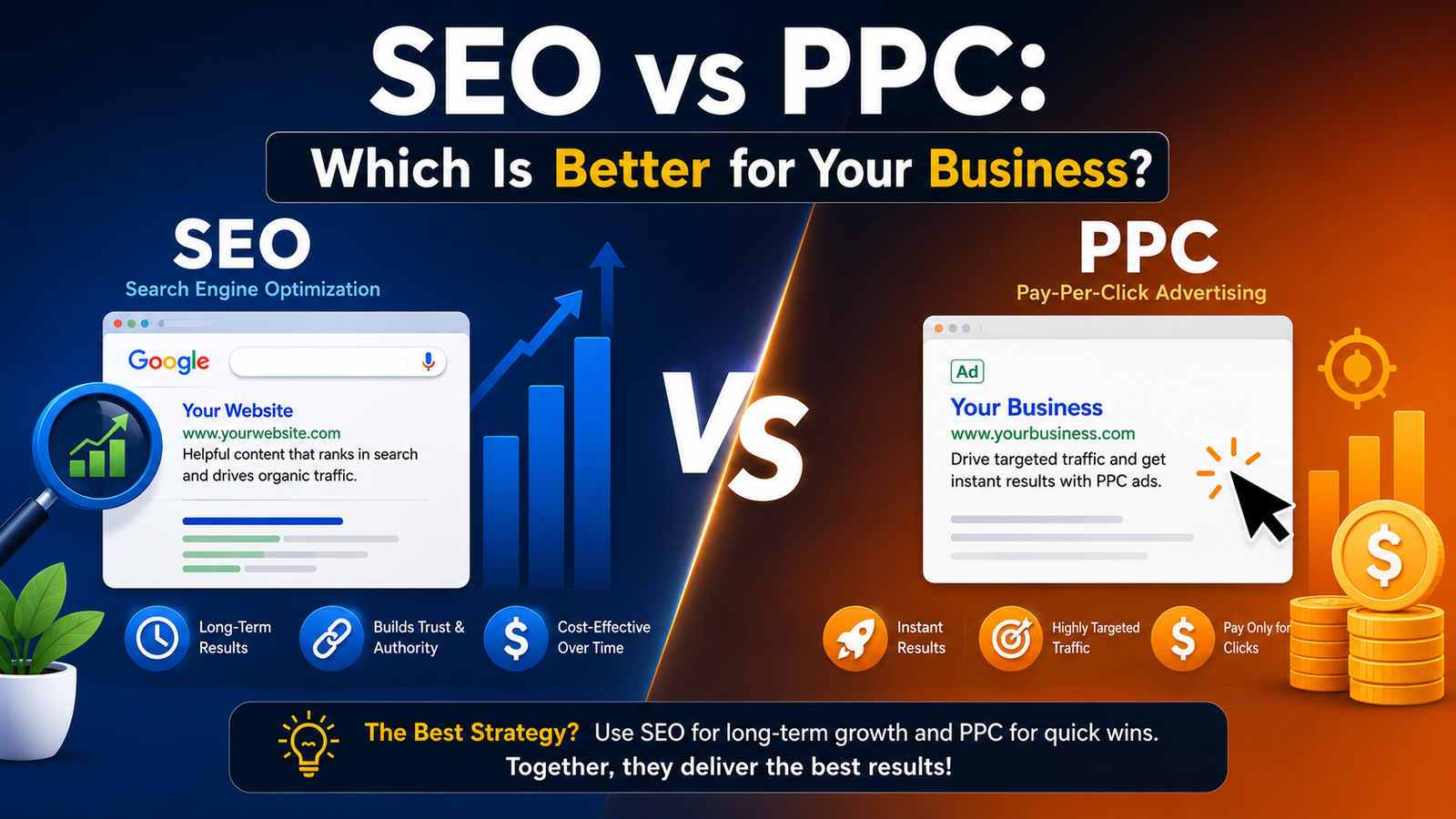
SEO earns traffic naturally through search engine rankings while PPC purchases visibility through paid advertising. Think of it this way as an example like:
- SEO is like building your own house. It takes time but once it’s built then it continues providing value.
- PPC is like renting a hotel room that you get immediate access to, but once you stop paying then what happens is that your stay ends.
What is SEO?
SEO (Search Engine Optimization) is the process of improving your website so it ranks higher in organic (unpaid) search engine results.
Most people Google to find information about products or services before making a decision. So you do well with SEO on your sites then there is a high chance of getting picked by Google for relevant searches.
SEO usually includes:
- Keyword research
- High-quality content creation
- On-page optimization
- Technical SEO improvements
- Link building
- User experience optimization
Picture a bakery that offers cakes on the internet. And SEO can help because if they optimize a page for “best birthday cakes in London” then Google might automatically rank it when someone searches for that phrase. But the only condition is that the bakery site has to have good content written as well. All of those clicks are free because Google doesn’t charge you for those visits.
What Is PPC?
PPC (Pay-Per-Click) is a digital advertising model where you pay each time someone clicks your advertisement. The most common PPC platform is Google Ads. Although businesses also run PPC campaigns on Bing, Facebook, LinkedIn, Instagram and many other platforms.
With PPC, you choose:
- Keywords
- Audience
- Budget
- Geographic location
- Ad schedule
- Landing pages
Once your campaign goes live then your ads can appear at the top of Google search results almost instantly.
Just take as an example, if you bid on “emergency plumber near me,” your advertisement may appear above the organic listings. That means more people will see it, right? But here is to understand that every click costs money regardless of whether that visitor becomes a customer.
What’s the Main Difference Between SEO and PPC?
The biggest difference between SEO and PPC is how you obtain traffic. Main differences are given below:
1. Organic Traffic vs Paid Traffic
SEO generates traffic naturally by ranking your website in Google’s organic search results. You don’t pay for individual clicks but earning those rankings takes consistent content creation, technical optimization and authority building. But if we talk about the PPC, on the other hand, places paid advertisements at the top of search results and every click costs money. While PPC delivers immediate visibility but the SEO focuses on creating a long-term source of sustainable traffic.
2. Time to See Results
SEO is a long-term marketing strategy. Depending on competition and website authority, it often takes three to six months or longer to achieve meaningful rankings. PPC delivers results almost immediately because your ads can appear within hours after launching a campaign. Businesses needing quick leads usually prefer PPC, whereas companies focused on long-term growth invest in SEO.
3. Cost Structure
One of the biggest differences is how you pay. SEO requires investment in content, website optimization, technical improvements, and link building, but there is no charge for each visitor. PPC follows a pay-per-click model, meaning every visitor has a direct advertising cost. Highly competitive industries may have significantly higher click costs than less competitive niches.
4. Long-Term Value
SEO creates a long-lasting digital asset. A well-ranked page can continue attracting visitors for months or even years with regular updates. PPC provides visibility only while your campaigns remain active. Once your advertising budget ends, your traffic usually stops as well.
5. Click-Through Rate and User Trust
Many users trust organic search results more than advertisements because they view them as earned rather than paid placements. As a result, SEO often generates stronger long-term credibility. PPC ads still receive excellent visibility, especially for commercial searches, but some users intentionally skip sponsored listings.
6. Targeting Capabilities
PPC offers advanced targeting options, including location, demographics, devices, audience interests, and even the time of day your ads appear. SEO primarily targets users through search intent and keyword optimization, making it less flexible but highly effective for attracting relevant organic traffic.
7. Scalability
Scaling PPC is straightforward as simply increasing your advertising budget to reach more people. SEO scales differently by expanding website content, improving authority, and optimizing additional pages. Although SEO takes longer to scale, its traffic continues growing without increasing the cost of every visitor.
8. Return on Investment (ROI)
PPC often produces faster returns because leads start arriving immediately after launching campaigns. SEO generally offers a higher long-term ROI because organic traffic doesn’t require paying for every click. Businesses focused on sustainable growth usually see greater returns from SEO over time.
9. Best Use Cases
SEO is ideal for businesses that want consistent traffic, brand authority, and long-term online visibility. PPC is better suited for product launches, seasonal promotions, local services, and businesses that need immediate leads or sales.
10. Maintenance Requirements
SEO requires regular content updates, technical improvements, backlink monitoring, and adapting to search engine algorithm updates. PPC demands continuous optimization of bids, keywords, ad copy, budgets, and conversion tracking to maintain profitability.
What are the Pros and Cons of SEO vs PPC?
Both marketing strategies have strengths and weaknesses. Understanding these trade-offs helps you make a smarter investment.
| SEO Pros | SEO Cons | PPC Pros | PPC Cons |
| Free organic clicks | Takes time to rank | Instant visibility | Clicks cost money |
| Builds long-term authority | Requires ongoing optimization | Fast lead generation | Traffic stops when ads stop |
| Higher trust among users | Algorithm updates can affect rankings | Precise audience targeting | Competitive keywords can be expensive |
| Better long-term ROI | Content creation takes effort | Easy campaign tracking | Requires continuous budget |
| Compounding traffic growth | Results aren’t guaranteed | Excellent for testing offers | Poor campaigns waste money quickly |
One lesson I’ve learned while managing SEO projects is that many businesses underestimate how much trust organic rankings build. Visitors often skip advertisements and head directly to organic listings because they perceive them as more credible.
At the same time I’ve worked with companies launching new services where PPC generated leads on the very first day something SEO simply couldn’t achieve.
What is the Cost Difference of SEO vs. PPC?
One of the biggest questions businesses ask is about SEO vs PPC cost. The answer depends on your industry, competition, and business goals.
SEO doesn’t charge per visitor. Instead, you typically invest in:
- SEO specialists
- Content writers
- Technical optimization
- Website improvements
- Link building
- SEO tools
While the upfront investment may seem significant, organic traffic becomes increasingly cost-effective over time because you aren’t paying for each visitor. For many businesses, SEO becomes one of the lowest-cost acquisition channels after rankings are established.
PPC costs vary dramatically. Your expenses depend on:
- Keyword competition
- Industry
- Geographic targeting
- Quality Score
- Daily budget
- Conversion rates
Some industries pay less than $1 per click, while others such as legal, finance, or insurance may pay $30 to over $100 for a single click.
That’s why PPC campaigns require continuous monitoring. A poorly optimized campaign can consume a large budget without producing meaningful results.
SEO vs Google Ads: Which Is Better?
The answer depends on what you need.
Choose Google Ads if you:
- Need leads immediately
- Are launching a new product
- Have limited time
- Want quick testing
- Need seasonal sales
Choose SEO Services if you:
- Want sustainable traffic
- Plan to grow your brand
- Want long-term ROI
- Publish valuable content regularly
- Want lower customer acquisition costs over time
In my experience, businesses often become too dependent on Google Ads. I’ve seen companies panic when advertising costs suddenly increased because they had almost no organic visibility. Businesses with strong SEO foundations usually handle these fluctuations much better because they continue receiving free traffic every day.
Difference Between SEO and PPC Keywords
Many beginners confuse the difference between SEO and PPC keywords, but they actually serve different purposes.
SEO Keywords
SEO keywords focus on building organic visibility through helpful content.
Examples include:
- Best CRM software
- How to improve website speed
- Digital marketing tips
- Local SEO checklist
These keywords often target informational searches and help build authority.
PPC Keywords
PPC keywords usually focus on conversions.
Examples include:
- Buy CRM software
- Hire an SEO agency
- Emergency electrician
- Roofing company near me
These searches often indicate stronger buying intent, making them valuable for paid advertising.
The best digital marketing strategies often use both keyword types. Informational SEO content attracts potential customers early, while PPC captures users who are ready to make a purchase.
SEO vs PPC: Which Is Better?
If you’re still wondering SEO vs PPC which is better, consider your goals rather than looking for a universal winner.
Choose SEO if:
- You want consistent organic traffic.
- You have a long-term growth strategy.
- You want to build brand authority.
- You publish educational content.
- You want lower acquisition costs over time.
Choose PPC if:
- You need immediate website traffic.
- You’re promoting a limited-time campaign.
- You’re launching a new product.
- You want quick lead generation.
- You need fast testing before investing in SEO.
Choose Both if:
The strongest marketing strategies rarely rely on only one channel.
A balanced approach might look like this:
- Use PPC to generate immediate leads.
- Build SEO content simultaneously.
- Gradually reduce dependence on paid advertising as organic traffic grows.
- Continue using PPC for promotions and competitive keywords.
This combination provides both short-term wins and long-term stability.
Can SEO and PPC Work Together?
Absolutely. SEO and PPC complement each other more than many businesses realize.
For example:
- PPC data reveals high-converting keywords you can target with SEO.
- SEO content improves landing page quality.
- Organic rankings increase brand credibility.
- PPC fills traffic gaps while SEO gains momentum.
- Both channels increase overall search visibility.
One project I worked on involved publishing SEO articles while running Google Ads for commercial keywords. The ads generated immediate inquiries, while the SEO content gradually became the largest source of leads several months later. Eventually, the business reduced its advertising spend because organic traffic had grown enough to support consistent lead generation.
Is SEO Better Than PPC for Small Businesses?
For many small businesses with limited budgets, SEO often delivers better long-term value. Instead of paying for every visitor, they gradually build an online asset that continues attracting customers.
However, PPC can still be valuable for:
- Grand openings
- Local promotions
- Holiday campaigns
- New service launches
- Testing demand
The ideal strategy depends on available resources rather than business size alone.
Does PPC Help SEO?
Not directly. Google has repeatedly stated that paying for Google Ads does not improve organic rankings. However, PPC can indirectly support SEO by:
- Driving brand awareness
- Increasing website exposure
- Testing landing pages
- Identifying profitable keywords
- Collecting conversion data
These insights can strengthen your overall SEO strategy even though ads themselves don’t influence rankings.
Final Thoughts
The SEO vs PPC debate isn’t really about choosing one winner. It’s about selecting the right strategy for your business objectives.
SEO is an investment that builds lasting visibility, authority, and sustainable traffic. PPC is a powerful tool for generating immediate results, testing campaigns, and reaching customers quickly.
If your budget allows, combining both often delivers the strongest results. PPC can provide immediate momentum while SEO creates long-term growth that continues long after your content is published.
Rather than asking whether SEO or PPC is better, ask which one best supports your current business goals. The answer may change as your business grows but understanding the strengths of each strategy will help you make smarter marketing decisions.