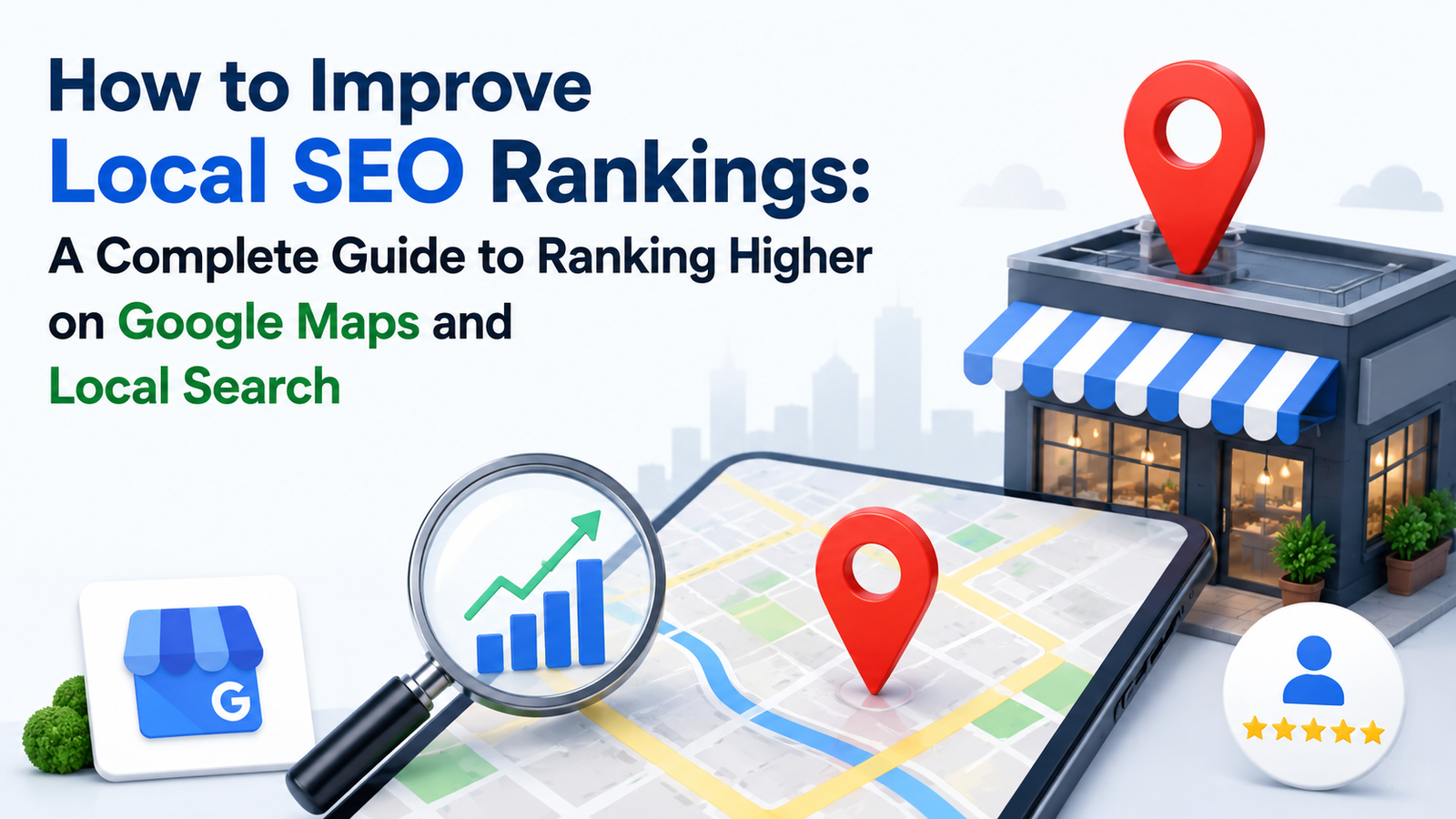
How to Improve Local SEO Rankings: A Complete Guide to Ranking Higher on Google Maps and Local Search
To improve local SEO rankings, start with optimizing your Google Business Profile, building consistent business citations, earning customer reviews, creating location-focused content, and strengthening local authority signals. These strategies help businesses rank higher in Google Search and Google Maps, attract more local customers, and increase visibility in location-based searches.
Many business owners focus on building a website but overlook the factors that influence local rankings. A fully optimized Google Business Profile, consistent business information, quality reviews, local backlinks, and location-focused content all play a role in determining where your business appears in search results.
The good news is that you don’t need a huge marketing budget to improve local SEO rankings. With the right strategy, you can increase your visibility on Google Search and Google Maps, attract more local traffic, and compete against larger businesses in your area.
In this guide, you’ll learn how to rank higher on Google Maps, improve your local search presence, and build a long-term local SEO strategy that actually works.
What Is Local SEO?
Local SEO is the process of optimizing your online presence so your business appears in local search results when people search for products or services nearby.
For example, when someone searches
- Best dentist near me
- Coffee shop in Chicago
- Emergency plumber in Dallas
- The hair salon is open now
Google uses location signals, relevance, prominence, and distance to determine which businesses appear in local search results.
The most effective local SEO techniques, ranking factors, optimization methods, and long-term strategies for improving local search performance are discussed below.
If you want to learn more about local SEO, this blog is perfect for you: https://seoserviceshub.co.uk/what-is-local-seo/
1. Make Sure to Claim and Verify Your Google Business Profile
Your Google Business Profile (GBP) is often the most important ranking factor for local SEO. Optimizing your Google Business Profile is one of the most important tasks included in professional Local SEO Services because it directly impacts local visibility and customer engagement.
2. Just Choose Accurate Business Categories
Many businesses select broad categories that don’t accurately describe their services.
Instead of choosing:
- Restaurant
Choose:
- Mexican Restaurant
- Italian Restaurant
- Seafood Restaurant
Google uses categories to understand exactly what your business offers.
3. Then Make Sure to Maintain Consistent Nap Information
Fill out every available field, including:
- Business description
- Phone number
- Website URL
- Services
- Products
- Business hours
- Appointment links
- Service areas
A complete profile provides stronger relevance signals.
1. Take Notes of The GBP Photo Strategy That Most Businesses Ignore
Many guides simply say “upload photos.” That’s not enough. The businesses dominating local search results typically maintain a consistent photo strategy.
2. Best Types of Google Business Profile Photos
Upload photos from multiple categories:
- Exterior photos
- Interior photos
- Team photos
- Product photos
- Before-and-after work photos
- Customer interaction photos
- Equipment photos
- Service delivery photos
Aim for at least 10 high-quality photos across different categories.
How Often Should You Upload Photos?
Fresh photos signal an active business. Instead of uploading 50 images once and forgetting about them, add new photos every month. This ongoing activity helps keep your profile relevant and engaging.
3. Use the Google Business Profile Q&A Section
One of the most overlooked local SEO opportunities is the Questions and Answers section. Most businesses ignore it completely.
Add Your Own Questions
You can proactively ask and answer common customer questions, such as:
- Do you offer same-day service?
- Do you provide free estimates?
- What payment methods do you accept?
- Are appointments required?
This helps potential customers while adding valuable keyword-rich content to your profile.
Monitor Customer Questions
If you don’t answer customer questions, someone else might. Always monitor and respond promptly to maintain accurate information.
4. Google Business Profile Posts: An Easy Visibility Boost
Google allows businesses to publish updates directly on their profile. The types of posts include:
Offer Posts
Perfect for discounts, promotions, and seasonal deals.
Event Posts
Useful for workshops, community events, and special occasions.
Update Posts
Share company news, announcements, and recent projects.
Product Posts
Highlight specific products and services.
How Often Should You Post?
A weekly posting schedule works well for most businesses. Regular updates show both customers and Google that your business remains active.
5. Collect Customer Reviews Regularly
Every local SEO guide says to get more reviews. Very few explain how.
Focus on Review Velocity
A steady stream of reviews looks more natural than receiving dozens at once. Consistent monthly reviews send stronger trust signals than sudden spikes.
Encourage Detailed Reviews
Customers naturally mention the following:
- Your service
- Your location
- Their experience
can strengthen local relevance.
For example:
“The best roofing company we found in Austin. Fast service and great communication.”
Respond to Every Review
When responding, naturally reference services and locations.
Example:
“Thank you for choosing our HVAC repair services in Houston. We’re glad we could help.”
These responses contribute additional local relevance signals.
6. Create Location-Specific Pages
Not every business has a storefront. Plumbers, electricians, cleaners, landscapers, consultants, and mobile service providers face unique challenges.
Should You Display Your Address?
If customers don’t visit your location, Google recommends hiding your address and setting service areas instead.
Define Your Service Areas Properly
Instead of setting a large radius, select specific cities and areas you actively serve. This helps Google better understand your geographic coverage.
Create City-Specific Landing Pages
If you serve multiple cities, create unique pages for each location. Avoid copying and pasting identical content.
Each page should include:
- Local information
- Unique testimonials
- Relevant services
- Area-specific content
1. Create Location Pages That Rank
Location pages remain one of the strongest local SEO assets. Creating optimized location pages follows many of the same best practices used in comprehensive SEO Services, including keyword targeting, content optimization, and internal linking.
What to Include
Each page should contain:
- Unique content
- Local customer testimonials
- Embedded Google Maps
- Service information
- Local FAQs
- Contact details
Avoid Duplicate Content
Google prefers pages that provide unique value. If every city page contains the same text, rankings often suffer.
2. Implement Local Business Schema Markup
Schema markup helps search engines understand your business information. The essential elements include:
LocalBusiness Schema
Includes:
- Business name
- Address
- Phone number
- Website
- Operating hours
- Geographic coordinates
Review Schema
Helps search engines understand customer ratings.
FAQ Schema
Allows frequently asked questions to appear more prominently in search results.
Test Your Schema
Use Google’s Rich Results Test to verify implementation. Even simple schema improvements can strengthen local search visibility.
3. Analyze Competitors That Already Rank
Your local competitors are providing valuable ranking clues.
Review Their Google Business Profiles
Look at:
- Categories
- Review counts
- Review frequency
- Photos
- Services listed
Study Their Website Structure
Identify:
- Service pages
- Location pages
- Blog topics
- Internal linking strategies
The goal isn’t copying competitors but understanding what Google already rewards in your market.
4. Build Local Citations and Directory Listings
Citations help confirm your business information across the web.
Important Citation Sources
- Yelp
- Apple Business Connect
- Bing Places
- Tripadvisor
- Industry-specific directories
Ensure your Name, Address, and Phone Number remain identical everywhere.
5. Local Link Building Strategies That Actually Work
Many businesses underestimate local backlinks.
Sponsor Community Events
Supporting local events often earns valuable local links.
Join Business Organizations
Memberships in chambers of commerce and business associations frequently provide authoritative backlinks.
Partner With Local Businesses
Build relationships with complementary businesses for referral opportunities and local mentions.
Earn Local Press Coverage
News mentions remain one of the strongest local authority signals.
Consider:
- Community involvement
- Charity work
- Industry expertise
- Local success stories
6. Local SEO for Multi-Location Businesses
Businesses with multiple branches need a structured approach.
Create Separate Google Business Profiles
Each location should have:
- Its own listing
- Unique phone number
- Accurate address
- Dedicated landing page
Build Unique Location Pages
Avoid using the same content across all locations. Every page should include information specific to that branch.
Why Does Local SEO Matter?
Local searches often lead to action. People searching for nearby businesses usually have strong buying intent, which means they’re ready to call, visit, or make a purchase.
Some of the biggest benefits include:
- Increased website traffic
- More phone calls and inquiries
- Higher visibility in Google Maps
- Better brand trust through reviews
- More local customers without paid advertising
How Is AI Search Changing Local SEO?
Google’s AI Overviews and AI-powered search experiences are changing how users discover businesses. Businesses with strong reviews, structured data, consistent citations, and authoritative mentions are more likely to appear in AI-generated recommendations. Optimizing for local SEO today also improves your visibility in emerging AI search platforms.
How to Perform a Local SEO Audit?
A local SEO audit helps identify weaknesses before competitors do.
Review:
- Google Business Profile completeness
- Review quality and frequency
- Citation consistency
- Website optimization
- Schema implementation
- Local backlinks
- Competitor benchmarks
Performing an audit every quarter helps maintain and improve rankings over time.
How to Increase Google Ranking for Free?
If you’re looking for free ways to improve local SEO rankings, focus on the following:
- Optimizing your Google Business Profile
- Collecting customer reviews
- Publishing local content
- Building citations
- Creating location pages
- Improving internal linking
- Earning local backlinks
These activities require time and consistency more than money.
Final Thoughts
Local SEO is not about finding a single ranking trick. Businesses that consistently appear at the top of Google Maps and local search results usually have a complete Google Business Profile, a strong review strategy, accurate citations, quality local content, and trusted backlinks.
Start with your Google Business Profile, strengthen your website’s local signals, and build credibility through reviews and community engagement. Over time, these efforts compound, helping your business rank higher on Google Search, Google Maps, and future AI-driven search experiences.