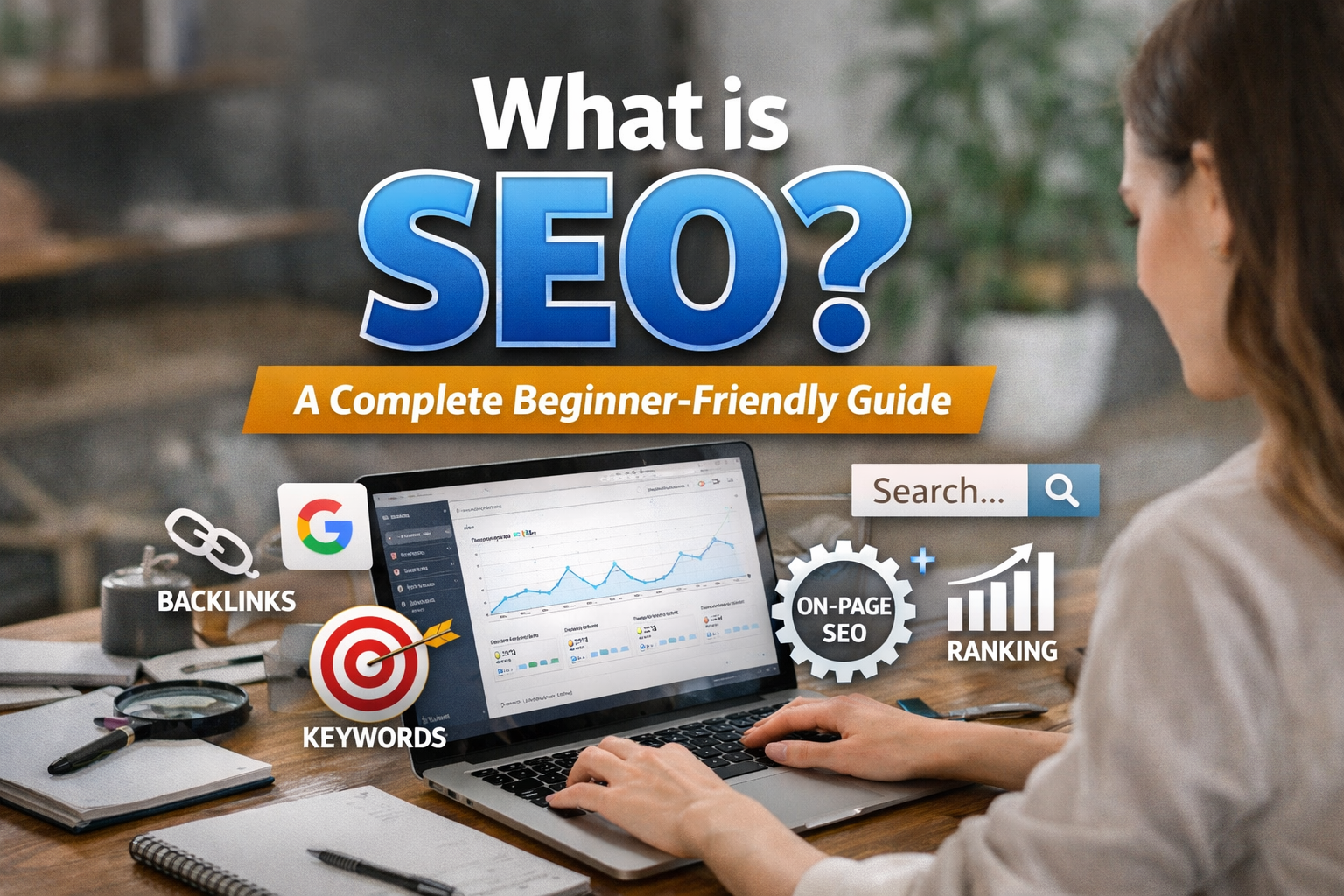
SEO is the process of improving your website so it ranks higher on search engines and attracts the right audience organically. It simply goes beyond just keywords, combining technical improvements, high-quality content, and authority building to create a better user experience. In this blog, we will cover what is SEO, how it works, its core pillars, strategies, common mistakes, career opportunities, and the future of AI in SEO.
What Does SEO Stand For?
SEO stands for Search Engine Optimisation. This term refers to improving your website so search engines can understand it better and show it to users searching for relevant topics. It’s not about tricking Google, it’s about making your content genuinely useful and accessible.
The seo meaning is often misunderstood as just ranking on Google, but it goes much deeper than that. SEO is about creating a better experience for users while helping search engines recognise your value.
When your website provides helpful information, answers questions clearly, and is easy to navigate, search engines naturally reward it with better rankings. So, SEO is really about people first and then algorithms second.
What is Search Engine Optimisation?
Search engine optimisation is the process of improving different aspects of your website so it appears higher in search engine results pages. The goal is to attract the right audience, people who are already searching for what you offer.
It involves content improvement, technical fixes, and building trust online. Over time, these efforts help your website grow organically without relying on paid ads.
How Does SEO Work?
Search engines like Google follow a structured process. First, they discover your website by scanning links across the internet. Then, they store your content in their database. Finally, when someone searches for something, they rank pages based on relevance, quality, and user experience.
What are the Pillars of SEO (The Core Foundation)?
SEO is built on three major components, often called the pillars of SEO. These pillars work together to determine your website’s performance in search results.
Technical Seo
The first pillar is technical SEO. This focuses on how your website functions behind the scenes. If your site is slow, difficult to navigate, or not mobile-friendly, it can negatively affect your rankings. Many businesses rely on technical seo services to ensure their website runs smoothly and meets search engine requirements.
On-Page Seo
The second pillar is on-page SEO. This is where your content plays a major role. It includes using the right keywords, writing clear headings, and creating valuable content that answers user queries. It also involves internal linking, such as guiding users to related pages like seo services, which improves both user experience and site structure.
Off-Page Seo
The third pillar is off-page SEO. This focuses on building your website’s authority through external signals like backlinks and brand mentions. When other trusted websites link to you, it signals credibility to search engines and improves your rankings.
What is Paid Search vs Organic SEO?
Many people confuse SEO with paid advertising, but they are quite different in how they work and the results they deliver.
Paid search provides instant visibility, but it requires continuous spending, and traffic stops once the budget runs out. Organic SEO focuses on earning traffic naturally by optimising your website. It takes time, but the results are long-lasting and cost-effective. A balanced approach can work well, but SEO remains the foundation for sustainable growth.
How Does SEO Work in Real Life?
To understand SEO practically, think about how people search online. When someone looks for a product or service, search engines aim to provide the most relevant and trustworthy results.
This is where local seo becomes especially important. If your business operates in a specific area, optimising for local searches helps you connect with nearby customers who are ready to take action. It makes your business more visible to the right audience at the right time.
Why is SEO Important in 2026?
SEO is one of the most powerful digital marketing strategies because it builds long-term value. Instead of paying for every click, you create a system that continuously brings in traffic.
It helps improve your brand visibility, builds trust with your audience, and ensures your website stays competitive in search results. Over time, SEO can become your primary source of high-quality traffic.
What is an SEO Strategy?
A well-defined seo strategy is essential if you want consistent results. Without a strategy, your efforts can feel random and ineffective.
An SEO strategy focuses on understanding your audience, targeting the right keywords, and creating content that aligns with user intent. It also includes optimising your website technically and building authority over time. A strong strategy ensures every action you take contributes to your overall growth.
What are the Common SEO Mistakes to Avoid?
Even with the best intentions, many websites struggle due to simple but critical mistakes. Avoiding these can save you time and help you see faster improvements.
- Ignoring technical issues like slow speed or broken links
- Using duplicate or low-quality content
- Stuffing keywords unnaturally into content
- Not optimising the website for mobile users
- Skipping internal linking between pages
How Long Does SEO Take?
One of the most common questions is how long SEO takes to show results. The truth is, SEO is a long-term investment. You might start noticing small improvements within a few months, but strong and consistent results usually take six months to a year. The timeline depends on your competition, industry, and how well your strategy is executed. Patience and consistency are key when it comes to SEO.
How to Set Objectives for Different Types of Businesses While Using SEO Strategies?
When it comes to SEO, your goals shouldn’t be the same for every business. The way you set objectives depends on what type of website or business model you’re running.
If you have a transactional business, especially an eCommerce store, your main focus should be on conversions. This means tracking how many visitors turn into customers, how many products are sold, and how effectively your website generates revenue. On the other hand, if your site offers services but doesn’t sell directly online, your priority should shift towards lead generation and then getting inquiries, form submissions, or calls.
For informational websites, the approach is slightly different. Instead of focusing on direct sales, the goal is usually to increase brand awareness and drive consistent traffic. The more people visit your site and engage with your content, the stronger your online presence becomes.
It’s also important to understand that SEO is not a one-time task. Even after you’ve implemented a solid strategy, the work doesn’t stop. Search trends change, competition evolves, and algorithms update frequently. That means you may need to adjust your approach along the way and stay patient while results build over time. With a strong foundation and consistent effort, SEO eventually leads to better user experience and higher conversions.
How to Become an SEO Specialist?
To become an SEO specialist, start by learning how search engines like Google rank websites and understand basic concepts like keywords, on-page SEO, and backlinks. Practice by creating your own website or blog and applying what you learn in real situations. Use tools like Google Analytics and Google Search Console to track performance and improve your skills. Keep learning through courses, blogs, and updates, then build a portfolio to start freelancing or getting a job.
Businesses rely heavily on organic traffic to grow online, and when SEO is done right, it becomes a cost-effective way to attract customers. That’s why skilled SEO professionals are always in demand. The right SEO services can help you rank higher in search results and improve your online visibility in no time.
What are the Skills You Need to Become an SEO Specialist?
To succeed in SEO, you need a mix of technical knowledge and creative thinking. It’s not just about rankings, it’s about understanding users and delivering value.
Some essential skills include:
- Keyword Research: Knowing how to find and target the right search terms so your content reaches the right audience
- Link Building: Building high-quality links to increase your website’s authority and trust
- Content Optimisation: Creating and improving content so it performs well in search results
- Data Analysis: Understanding traffic, user behaviour, and performance metrics to make better decisions
- Copywriting: Writing clear, engaging, and valuable content that connects with readers
- Technical SEO: Improving website speed, fixing errors, and ensuring mobile optimisation
Along with these technical skills, soft skills like communication, problem-solving, and critical thinking are equally important. SEO often involves teamwork and continuous learning, so adaptability is key.
The Mixture of AI and the Future of SEO
Artificial intelligence is rapidly transforming the SEO landscape. From content creation to keyword research and data analysis, AI tools are making SEO more efficient and insightful.
Search engines are also becoming smarter, focusing more on user intent rather than just keywords. Features like AI-generated search results and advanced algorithms are changing how content is ranked and displayed.
This means businesses need to adapt by creating more relevant, high-quality, and user-focused content. The future of SEO is not just about optimisation, it’s about delivering real value in smarter ways.
Final Thoughts
When done correctly, SEO can become one of the most powerful growth drivers for any business. It helps you attract the right audience, build trust, and increase conversions over time. With the right strategy, tools, and mindset, SEO is a long-term investment in your brand’s success.